
A homeowner does not usually submit a quote request just for fun.
They may have a leaking pipe, an air conditioner that stopped working, a roof concern, an electrical issue, a remodeling project, or a service problem they are ready to solve.
They search online, find a few businesses, fill out a form, request an estimate, or call to ask for help.
Then they wait to see who responds.
For home service businesses, that moment matters.
The challenge is that new leads often come in while the team is already busy. Technicians are on job sites. Owners are driving between appointments. Office staff are handling calls, schedules, invoices, and existing customers. A new form submission may come in after hours or during the busiest part of the day.
Nobody is intentionally ignoring the lead.
But if there is no clear process for what happens next, that homeowner may contact another company before your team gets the chance to start a conversation.
That is how new leads go cold.
The solution is not simply to work harder or ask your team to remember more callbacks. It is to create a reliable lead follow-up process that responds quickly, gives homeowners an easy way to engage, and moves the right opportunities toward a scheduled next step.
Home Service Leads Often Need Help Now
Many home service inquiries have urgency behind them.
A homeowner may not need a technician at their door within five minutes. But they usually want to know that someone is available, their request was received, and help is on the way.
They may be worried about a problem getting worse. They may be trying to compare providers before committing. They may be reaching out between work obligations. Or they may be contacting multiple businesses because they are unsure who can help first.
That means a delayed response can create doubt.
The homeowner may start wondering:
- Did the form go through?
- Is this company too busy to help?
- Will anyone call me back?
- Should I contact someone else?
- How long will it take to get an estimate or appointment?
A fast, helpful response does not guarantee that every lead will book.
But it gives your business a better opportunity to start the conversation before the homeowner moves on.
Why Home Service Businesses Lose Good Leads
Most home service businesses do not lose leads because they do not care.
They lose leads because the workday is busy and new inquiries do not always arrive at a convenient time.
A typical situation might look like this:
- A homeowner submits a quote request from your website.
- The owner is on a job site.
- The office is handling incoming calls and scheduling.
- A technician is driving between appointments.
- The notification sits in an inbox or CRM.
- Someone plans to call later.
- The homeowner contacts another company that responds first.
The issue is not effort.
It is the lack of a dependable system between new inquiry and next action.
When every lead depends on someone noticing a notification, finding time to call, remembering to follow up, and continuing the conversation after a missed call, opportunities can easily fall through the cracks.
A New Lead Should Trigger a Clear Process
A home service lead should not simply become another email notification.
It should trigger a process.
That process should help make sure the homeowner receives a timely acknowledgment, has an opportunity to speak with someone, and knows what happens next.
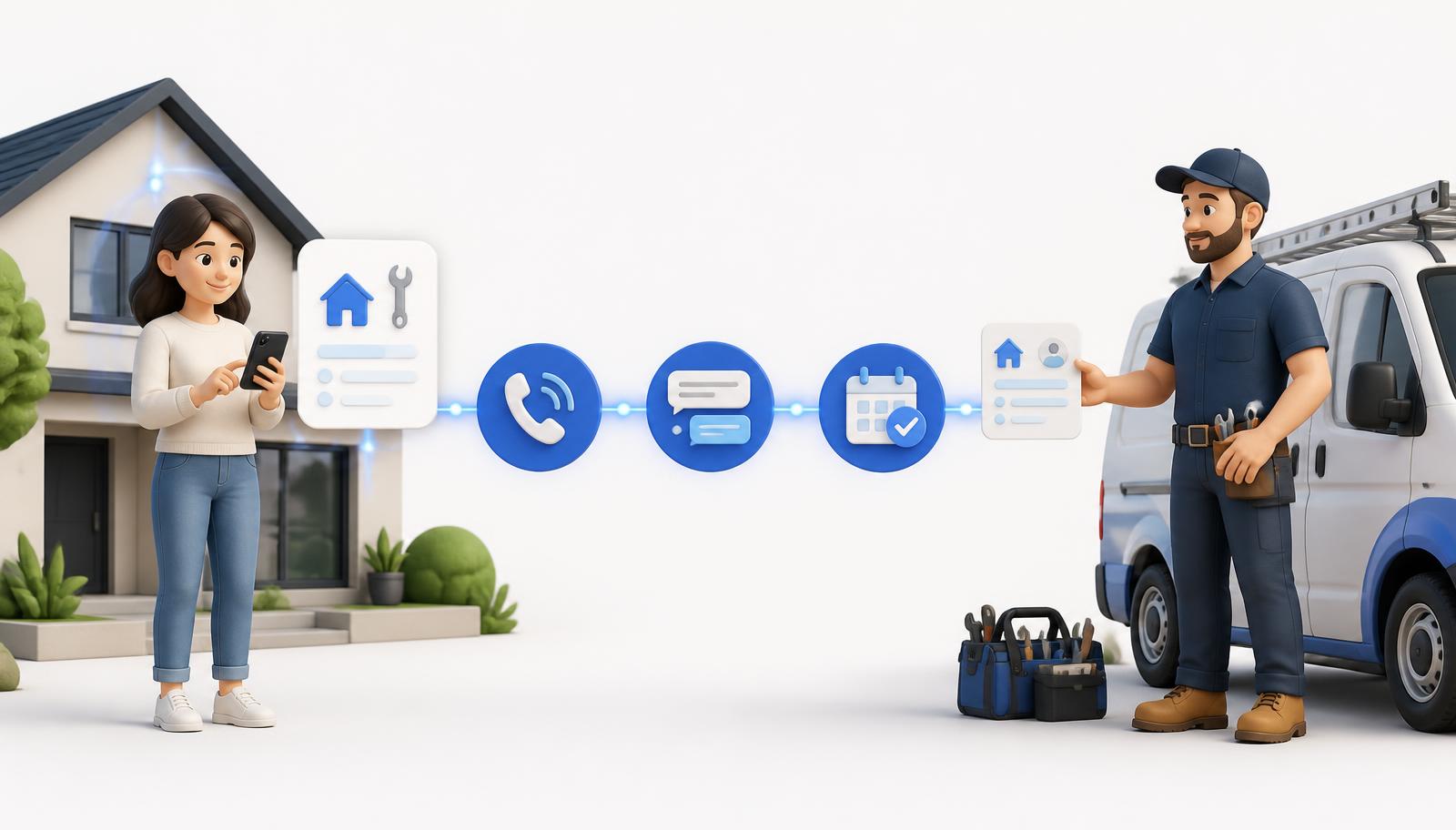
A strong home service lead follow-up workflow may look like this:
A homeowner requests a quote, service, or more information.
The new lead enters your system immediately.
The homeowner receives a quick acknowledgment.
An outbound call is made while interest is still high.
If they cannot answer, they receive a conversational text with an easy way to respond.
Basic service details and scheduling preferences are gathered.
The homeowner is guided toward an estimate, service call, consultation, or callback.
A ready-to-talk lead is handed to the right person on your team.
That does not mean every homeowner receives the exact same experience.
The details should reflect your services, service area, availability, scheduling process, and the type of request that came in.
But the core principle stays the same:
Every new inquiry should have a clear path forward.
Start With a Quick Acknowledgment
The first thing a homeowner needs to know is that their request went through.
A quick acknowledgment can be simple:
“Thanks for reaching out. We received your request and are getting in touch to learn more about how we can help.”
This does not need to be a long message or a full estimate.
Its job is to reduce uncertainty.
It lets the person know that:
- Their request was received.
- Your business is aware of the issue.
- They are not waiting in silence.
- A next step is coming.
This is especially important when someone submits a form outside normal hours or while your team is busy helping existing customers.
An acknowledgment is not the entire follow-up process—but it is an important first step.
Use a Timely Call to Start a Real Conversation
Home service requests often require more context than a form can provide.
A homeowner may say they need help with HVAC, plumbing, roofing, electrical work, cleaning, landscaping, pest control, restoration, remodeling, or another service. But a real conversation can help clarify the situation, timing, location, and what the homeowner needs next.
That is where a timely outbound call can help.
A call gives your business a chance to:
- Understand the homeowner’s request
- Ask a few relevant questions
- Confirm whether the service is a fit
- Explain the next available step
- Help schedule an estimate, consultation, callback, or service visit
- Route the opportunity to the appropriate person or department
But a homeowner may not be able to answer immediately.
They could be at work, driving, handling the issue at home, with family, or simply unable to talk at that moment.
That does not mean the lead is no longer interested.
It means they need another convenient way to continue the conversation.
Give Homeowners an Easy Way to Reply by Text
A conversational text message can be an effective next step when a call goes unanswered.
The goal is not to send a generic automated message and leave the homeowner to figure everything out alone.
The goal is to make it easy for them to respond when they have a moment.
For example, a helpful message might let them know that you tried to reach out about their request and invite them to reply by text or choose a better time to talk.
That gives them options.
They may want to:
- Confirm the service they need
- Ask a quick question
- Share more details
- Tell you when they are available
- Request an estimate
- Schedule a consultation
- Continue the conversation without taking a phone call immediately
Texting helps reduce friction.
A homeowner who cannot take a call at 2:00 p.m. may still be able to send a reply a few minutes later. That can keep the opportunity moving instead of forcing them to start over with another company.
Do Not Treat One Missed Call as a Lost Opportunity
A missed first call is common.
It should not automatically mean the lead is dead.
A homeowner may have been interested when they filled out the form and still be interested later. They may simply have missed the call at a bad time.
The key is having a respectful follow-up process.
That may include a timely text, another appropriate outreach attempt, or a simple invitation to choose a better callback time. The right timing and number of follow-ups will vary based on your business, the type of service, the urgency of the request, and the homeowner’s preferred way to communicate.
Good follow-up is not about repeatedly contacting someone until they respond.
It is about making sure an interested homeowner has more than one reasonable opportunity to reconnect.
Move the Conversation Toward a Specific Next Step
The purpose of responding quickly is not just to get a reply.
It is to help the homeowner take the next step.
Depending on your business, that next step may be:
- Scheduling an estimate
- Booking a service appointment
- Setting a consultation
- Choosing a callback time
- Confirming service availability
- Providing additional information
- Connecting with a dispatcher, sales representative, technician, or office team member
- Determining whether the request needs urgent attention
A clear next step gives the conversation direction.
Without it, leads can stall even after they respond. A homeowner may say they are interested, but if nobody helps them move forward, they may keep looking elsewhere.
The easier you make the next step, the easier it is for a new lead to become a real opportunity.
The Best Process Still Works When Your Team Is in the Field
Home service businesses should not have to choose between serving current customers and responding to new leads.
But that is often what happens when lead follow-up depends entirely on manual effort.
Your team may be:
- On job sites
- Driving between appointments
- Working with a customer
- Handling an emergency request
- Managing a packed schedule
- Answering inbound calls
- Completing estimates
- Finishing work for the day when a new inquiry arrives
Those are exactly the moments when a lead follow-up process matters most.
A dependable system helps ensure that a homeowner gets acknowledged and contacted even when your people are focused on the work that requires their attention.
That does not replace your team.
It helps protect their time so they can step in when a lead is ready for a real conversation, estimate, appointment, or service decision.
What a Complete Home Service Lead Follow-Up System Should Include
A complete process will look different for every home service business. But most strong systems include these core pieces:
Immediate lead capture
New inquiries from forms, ads, calls, referrals, or messages should enter the system without delay.
Quick acknowledgment
The homeowner should know their request was received and that a next step is coming.
Timely outbound outreach
A prompt call can start the conversation while the homeowner is still actively looking for help.
Conversational SMS
If the homeowner cannot answer, text gives them an easy, low-friction way to reply.
Respectful follow-up and nurture
A missed first connection should not end the process. Appropriate follow-up gives interested people another opportunity to engage.
Scheduling and next-step guidance
The conversation should move toward an estimate, service call, consultation, callback, or another clear action.
Team handoff
When the lead is ready, the right person on your team should have the context needed to take over the conversation.
Together, these steps create a more reliable experience for both your business and the homeowner.
How Smart Contact AI Helps Home Service Businesses Respond Faster
Smart Contact AI helps home service businesses create a more complete process behind new inquiries.
When a homeowner requests service, an estimate, or more information, Smart Contact AI can help your business:
- Respond quickly to the new inquiry
- Make outbound AI calls when appropriate
- Continue the conversation through conversational SMS
- Follow up respectfully when the homeowner does not respond right away
- Gather basic details based on your workflow
- Help move the homeowner toward an estimate, callback, consultation, appointment, or service visit
- Hand qualified opportunities to the right person on your team
The goal is not to replace the people who do the work.
The goal is to help make sure new leads do not go cold while your team is busy serving the customers already on the schedule.
For home service businesses, a better response process can mean fewer missed opportunities, less manual chasing, and more conversations with homeowners who are ready to take the next step.
Frequently Asked Questions
Why do home service leads go cold?
Home service leads often go cold when there is too much delay between the initial request and a meaningful response. A homeowner may contact multiple providers, get distracted, or assume your business is too busy to help if they do not hear back quickly.
Should I call a homeowner after they request a quote online?
In many cases, a timely call can help you understand what the homeowner needs and guide them toward an estimate, appointment, or another next step. If they do not answer, a conversational text can make it easier for them to respond later.
What if a home service lead does not answer the phone?
A missed call does not necessarily mean the homeowner is no longer interested. Follow up with a helpful text, give them an easy way to reply or choose a better callback time, and use a respectful process rather than stopping after one attempt.
Is an automatic text enough for home service leads?
An automatic text can be a useful acknowledgment, but it is not a complete lead follow-up system by itself. A stronger process includes timely outreach, conversation, appropriate follow-up, scheduling, and handoff to the right person.
Can AI help schedule home service estimates or appointments?
Depending on your business workflow, AI can help move interested homeowners toward a callback, estimate, consultation, appointment, or service visit before handing the opportunity to the appropriate team member.
Does AI lead follow-up replace my office staff or service team?
No. AI lead follow-up is designed to help your team respond more consistently and spend more time on real conversations with qualified opportunities. Your team still provides the service, expertise, estimates, and decisions that require a person.