
A new lead is not the same thing as a booked appointment.
Someone can fill out a website form, request information, respond to an ad, ask for a quote, or call your business—and still never take the next step.
They may be interested. They may need help. They may even be ready to buy.
But if the conversation does not move quickly toward a clear outcome, that interest can fade.
They get busy. They forget to respond. They continue comparing options. They contact another company. Or they simply never make it to the point of scheduling.
That is why businesses should not measure success only by how many leads come in.
They should also look at what happens after the lead arrives:
- Did someone respond quickly?
- Did the lead have an easy way to continue the conversation?
- Was there a clear next step?
- Could they schedule without unnecessary back-and-forth?
- Did the right person receive the opportunity with the information they needed?
The goal is not just to generate more inquiries.
The goal is to turn more of the right inquiries into real, booked conversations.
A Fast Response Is Only the Beginning
Responding quickly to a new lead matters because interest is usually highest right after someone reaches out.
But a fast response by itself is not the finish line.
A lead can receive a call, text, or email and still disappear if the conversation does not have direction. The person may not know what to do next. They may not have time for a long phone call. They may be unsure whether they are ready to commit. Or they may want to schedule but find the process inconvenient.
That is where many opportunities stall.
The strongest businesses do not stop at “we contacted the lead.”
They create a process that helps the lead move from:
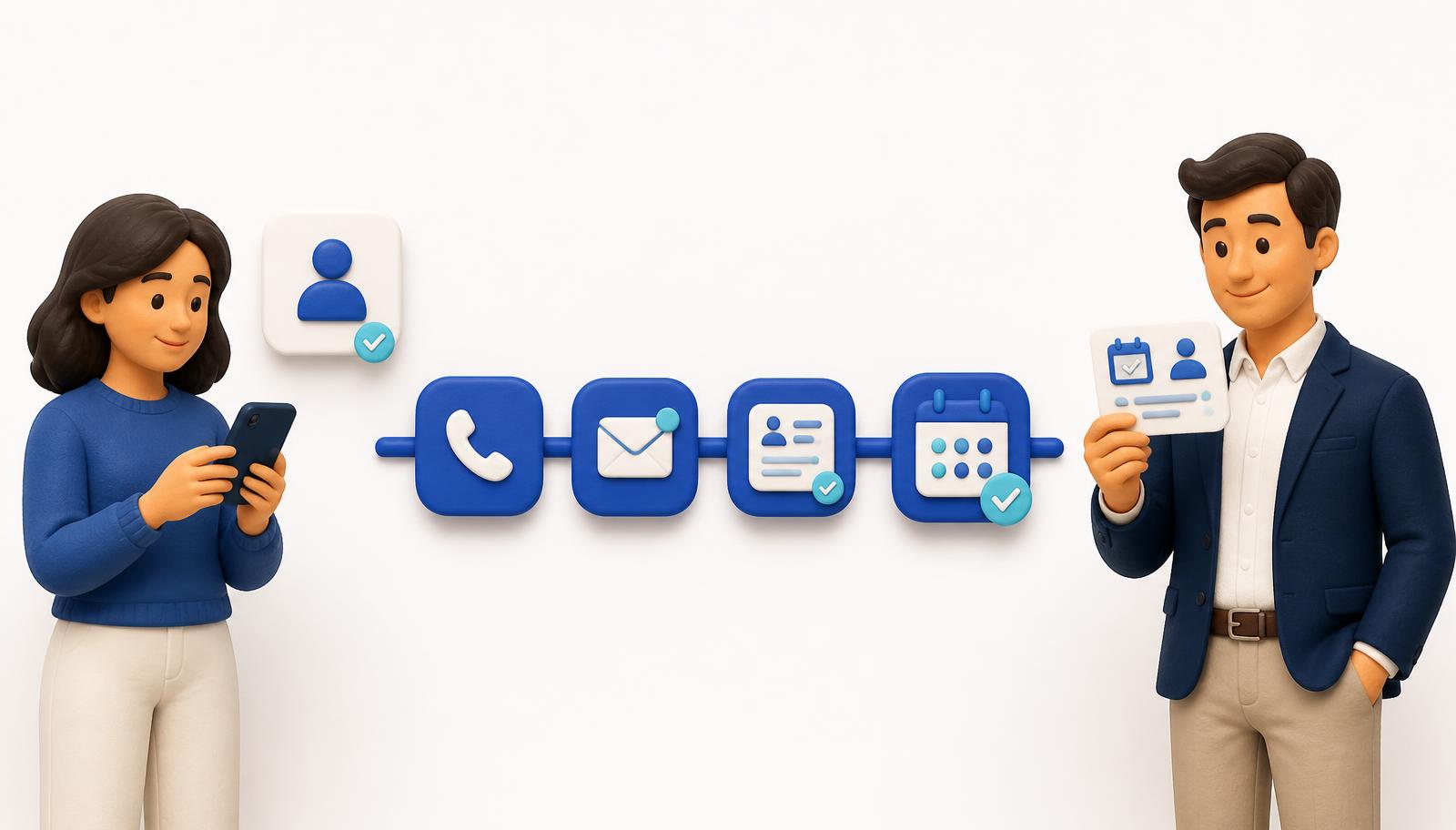
New inquiry → conversation → clear next step → booked appointment → team handoff
Each step should make the next one easier.
Why Interested Leads Fail to Book
A lead may be genuinely interested and still fail to schedule.
That does not always mean there is a problem with the lead. Often, there is friction in the process.
For example, a person may:
- Submit a form while they are busy and miss the follow-up call
- Receive a generic message that does not explain what happens next
- Have a question before they are ready to schedule
- Need to choose a better time for a conversation
- Get asked to call back without being given a simple option
- Wait too long for a response
- Be passed between team members without clear communication
- Feel uncertain about whether the appointment is the right next step
Small points of friction can add up quickly.
If scheduling requires too much effort, too much waiting, or too much uncertainty, a lead can go cold—even when they originally wanted help.
The answer is not to pressure every lead into booking.
It is to make the next step clear, useful, and easy.
Give Every New Lead a Clear Path Forward
A lead should not have to figure out what happens after they contact your business.
Your follow-up process should guide them toward the appropriate next step based on what they need.
For some businesses, that may be a consultation. For others, it may be an estimate, demo, service appointment, discovery call, callback, or meeting with the right team member.
The exact appointment can vary.
What matters is that the lead understands what they are being invited to do and why it is useful.
A clear path might look like this:
A new lead enters your system.
The lead receives a timely acknowledgment.
An outbound call gives them an opportunity to talk while interest is still high.
If they cannot answer, a conversational text gives them an easy way to respond.
Basic questions help clarify what they need.
The lead is guided toward the most relevant next step.
The appointment, callback, consultation, estimate, or demo is scheduled.
The right person on your team receives the context needed to continue the conversation.
This is more effective than simply sending a calendar link and hoping the lead takes action.
Make Scheduling Feel Like the Natural Next Step
People are more likely to book when the appointment feels like the obvious next move in the conversation.
That means the business should first help the lead understand what the appointment is for.
For example, a business might explain that the next conversation will help them:
- Get answers to their questions
- Discuss the details of their request
- Determine whether the service is the right fit
- Review available options
- Receive an estimate or recommendation
- Choose the best time for a service visit
- Speak with the appropriate specialist or team member
This gives the lead a reason to schedule.
Instead of asking, “Do you want to book something?” the process can naturally guide the conversation toward a useful outcome:
“Based on what you are looking for, the best next step is to schedule a quick conversation with the right person on our team. We can help find a time that works for you.”
That is clearer, more helpful, and easier to say yes to.
Use Calls and Texts Together to Keep the Process Moving
Not every lead will be ready or available to schedule during the first phone call.
Some people prefer to talk. Some would rather text first. Some may be at work, driving, with a customer, or unable to take a call when you reach out.
That is why a complete appointment-booking process should use calls and conversational SMS together.
A timely call can help start a real conversation, answer questions, and understand what the lead needs.
A text can give them flexibility when they cannot talk right away.
For example, after a missed call, a simple message can invite the person to reply by text, choose a better callback time, or continue toward scheduling when they are available.
The goal is not to overwhelm the lead with messages.
The goal is to make it easy for them to continue the conversation in a way that works for them.
Ask Only for the Details Needed to Guide the Next Step
Before booking, businesses often need some basic context.
The information will depend on the business, but it may include:
- What the lead needs help with
- Their preferred timing
- Their location or service area
- The type of project, service, or appointment they are interested in
- Whether the request is urgent
- The best way and time to contact them
- Any details the appropriate team member should know before the appointment
This information should help guide the lead—not turn the initial conversation into a long interrogation.
Ask what is needed to determine the right next step, then make it easy to move forward.
When the lead is ready to speak with a person, your team should have enough context to begin the conversation productively.
Remove the Back-and-Forth That Delays Booking
Many appointments are lost in the gap between “I’m interested” and “What time works?”
A lead may agree to a conversation, but then the scheduling process becomes slow or unclear:
- Someone needs to check availability.
- The lead has to wait for a callback.
- A message is sent without clear options.
- The right team member is not available.
- The conversation gets lost in an inbox.
- Nobody follows up after the lead says they are interested.
A good booking process removes as much unnecessary back-and-forth as possible.
That does not mean every appointment needs to be booked automatically.
It means the process should help move interested people forward without relying entirely on someone remembering every next action.
The more smoothly a lead can move from interest to a confirmed next step, the fewer opportunities your business leaves behind.
A Booked Appointment Should Include a Clean Handoff
Booking is not the end of the process.
Once an appointment, consultation, estimate, demo, service visit, or callback is confirmed, the next person on your team should have the right context.
They should not have to start from zero by asking the lead to repeat everything.
A clean handoff can include details such as:
- The lead’s name and contact information
- Why they reached out
- What service, product, or problem they are interested in
- Any key details collected during the initial conversation
- Their preferred appointment time
- The type of appointment that was scheduled
- Any questions or concerns they raised
This creates a better experience for everyone.
The lead feels heard. Your team is better prepared. And the appointment begins with momentum instead of confusion.
Respectful Follow-Up Helps Protect Booking Opportunities
Not every lead will schedule after the first interaction.
Some people need time. Some are comparing options. Some are busy when you first reach out. Some may want to book but forget to respond.
That is where respectful follow-up matters.
The goal is not to chase people endlessly.
It is to give interested leads another reasonable opportunity to continue the conversation and choose a next step.
A dependable follow-up process can help make sure a lead does not disappear simply because they missed a call, got distracted, or needed more time before booking.
When done well, follow-up is helpful. It reminds the person that your business is available, gives them another way to respond, and makes it easy to reconnect when the timing is right.
What a Complete Appointment-Booking Process Should Include
A complete system is more than a calendar link or one automated text.
It should bring together the key actions that help turn new inquiries into scheduled next steps:
Immediate lead capture
New inquiries should enter your process promptly, whether they come from a form, ad, referral, inbound call, or another source.
Timely acknowledgment
The lead should know their request was received and that someone is getting in touch.
Outbound call outreach
A timely call can create a direct conversation while interest is still high.
Conversational SMS follow-up
If the lead cannot answer, text provides an easy, low-friction way to continue the conversation.
Basic qualification
Gather the details needed to understand what the person needs and determine the appropriate next step.
Clear scheduling guidance
Help the lead move toward the right appointment, consultation, estimate, callback, demo, or service visit.
Confirmation and handoff
Confirm the next step and give the right team member the relevant context before they take over.
Together, these steps turn lead follow-up into a more dependable booking process.
How Smart Contact AI Helps Turn Leads Into Booked Appointments
Smart Contact AI helps businesses create a more complete process after a new lead comes in.
Instead of relying on one notification, one text, or someone remembering to call later, Smart Contact AI can help your business:
- Respond quickly when a new lead enters
- Make outbound AI calls when appropriate
- Continue the conversation through conversational SMS
- Follow up respectfully when the lead does not respond right away
- Gather basic details based on your workflow
- Guide interested leads toward an estimate, consultation, callback, service visit, appointment, or demo
- Hand qualified opportunities to the right person on your team with context
The goal is not to remove people from the process.
It is to make sure your people spend more time on meaningful conversations with leads who are ready for the next step.
A new inquiry has value. A booked appointment gives that opportunity momentum.
Frequently Asked Questions
How do I turn more leads into booked appointments?
Start with a timely response, make it easy for the lead to continue by phone or text, gather the basic details needed to understand their request, and guide them toward a clear next step such as an estimate, consultation, demo, callback, service visit, or appointment.
Why do leads fail to schedule appointments?
Leads can fail to schedule when the response is delayed, the next step is unclear, scheduling requires too much back-and-forth, they miss the first call, or nobody follows up after they express interest.
Should I send a calendar link to every new lead?
A calendar link can be useful in some situations, but it is not always enough on its own. Many leads have questions or need guidance before they are ready to book. A complete process helps them move toward the right next step instead of relying on a link alone.
Can text messages help book more appointments?
Yes. Conversational SMS can help leads respond when they cannot take a call, ask initial questions, choose a better callback time, and continue toward scheduling in a lower-friction way.
What information should I collect before booking an appointment?
Collect only the details needed to understand what the lead needs and guide them to the appropriate next step. This may include the type of service or request, preferred timing, location, urgency, and relevant context for the team member who will take over.
Does appointment booking replace a team handoff?
No. Booking creates a clear next step, but the right person on your team should still receive the lead’s context and be prepared to continue the conversation, provide service, answer questions, or make the final decision.